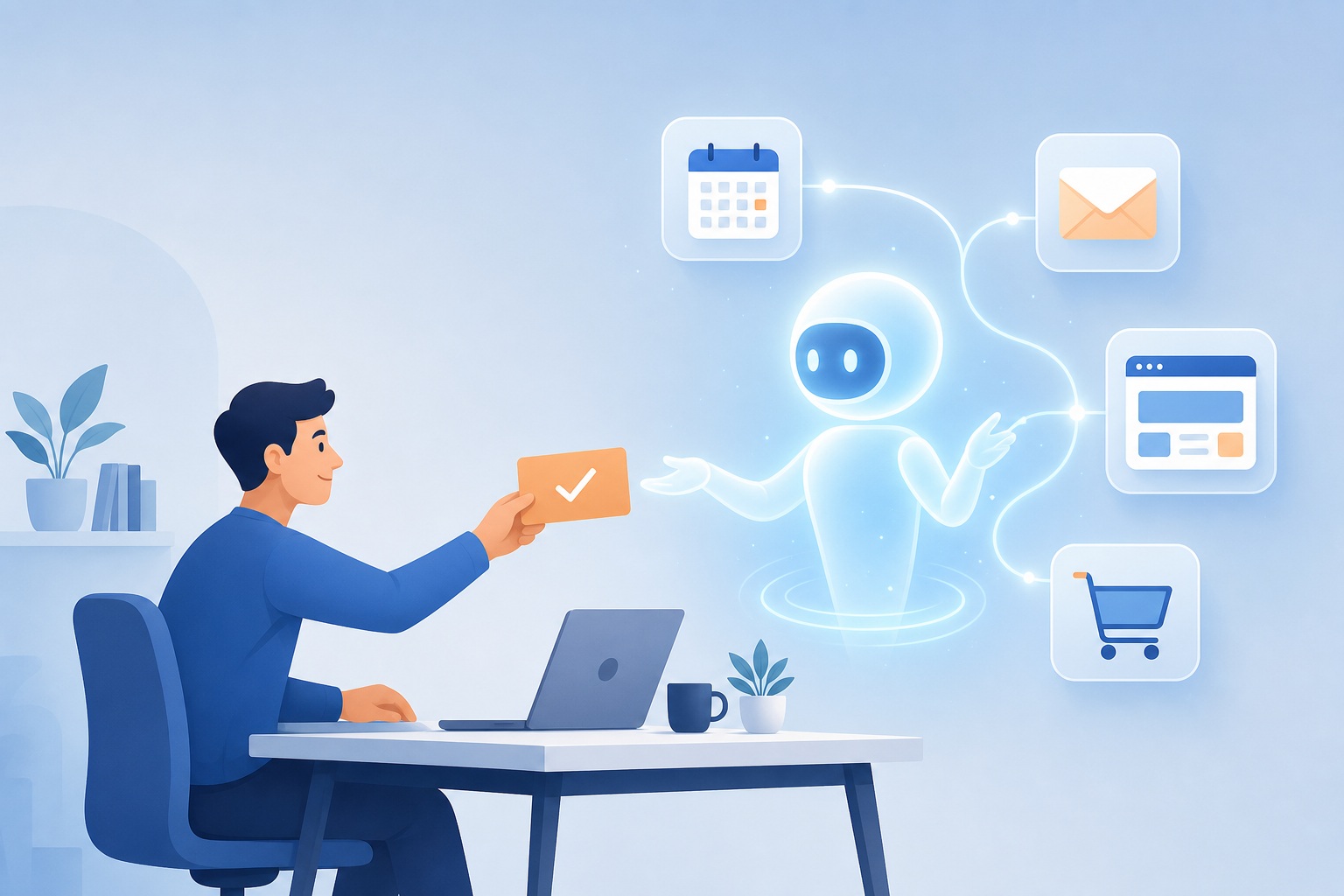
You keep hearing "AI agent," but what does one actually do?
A personal AI agent takes a goal from you and carries it out. It plans the steps. It uses your apps and personal data. Then it finishes the task. That's different from a chatbot, which just answers a question. The shift that defines it is from a system that responds to one that gets things done.
Two ideas get in the way of understanding this.
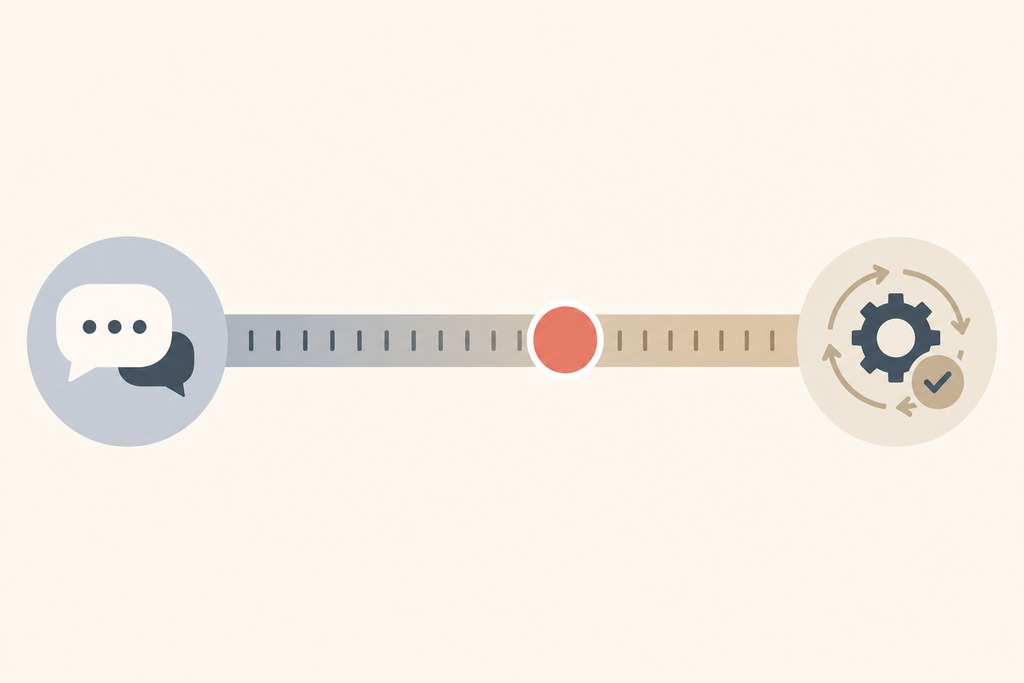
The first is that "chatbot" and "agent" are separate boxes. They aren't. They're two ends of a sliding scale: how much a system can act, remember, and reach into your other apps. The same product can sit anywhere on that scale.
The second is that a "personal AI agent" is a thing you go out and buy. It isn't. "Agent" names a level of ability. The assistants you already use (ChatGPT, Microsoft Copilot, Google Gemini, Siri) are becoming agents as those abilities get switched on. Most people will meet their first agent through a tool they already have, not something new.
What Is a Personal AI Agent?
A personal AI agent is AI software that acts on your behalf to reach a goal. It plans, makes decisions, uses your other apps and data, takes the steps, and remembers your preferences across sessions. A plain chatbot answers the question in front of it. An agent takes the outcome you want and does the work to get there.
The key word is "agent": as in agency, the ability to act. That one property separates it from a model that only writes text. Ask a chatbot to book a flight and it explains how. Ask an agent and it opens the booking site, fills the form, and, with your go-ahead, pays.
Personal AI agent: AI software that accepts a goal, breaks it into steps, uses your apps and data to act on those steps, and remembers your preferences over time: while keeping you in control of what it's allowed to do.
There is no single "personal AI agent" you can buy. Anyone selling you "the" personal AI agent is overstating a category that is really a spread of abilities across many tools. Treat "agent" as a capability level. Then the question stops being which product to buy. It becomes how much action, memory, and access to turn on.
What Makes It an "Agent"
Six traits separate an agent from a plain AI model: autonomy, goal-oriented planning, multi-step reasoning, tool use, persistent memory, and personalization. A system with none of these is a chatbot. One with all of them is a full agent. Most real products land somewhere in between.
| Trait | What it means | Everyday example |
|---|---|---|
| Autonomy | Acts with limited supervision, choosing how to reach a goal | Rebooks a canceled flight instead of just telling you it was canceled |
| Goal-oriented planning | Turns one objective into a sequence of steps | "Plan a Tokyo trip under $2,000" becomes flights, hotel, and itinerary |
| Multi-step reasoning | Works through ordered sub-tasks to a finish | Compares five products, then orders the one that fits |
| Tool use | Connects to browsers, email, calendars, and apps to act | Opens your calendar to add an event |
| Persistent memory | Remembers you across sessions, not just one chat | Recalls you prefer aisle seats and vegetarian meals |
| Personalization | Learns your habits and tone over time | Drafts replies that sound like you |
Core Characteristics of a Personal AI Agent
Personal context reaches an agent through two separate channels.
- Memory or personal context, such as previous conversations or saved preferences. Some of it the agent gathers on its own, from previous conversations: the trip you mentioned last week, the people you email most, the phrasing you keep correcting. The rest you hand it on purpose: a shipping address, a budget ceiling, a standing rule never to book red-eye flights. One kind accumulates quietly as you use it; the other you set deliberately.
Agent vs. Chatbot: and Is ChatGPT One?
A chatbot answers; an agent acts. That's the core split. But it's a gradient, not a wall, and the same product can slide along it as features turn on and off.
| Dimension | Chatbot / Basic Assistant | Personal AI Agent |
|---|---|---|
| Interaction | Reactive, answers what you ask | Proactive, takes initiative, can run on a schedule |
| Task scope | One prompt, one answer | Multi-step workflows to completion |
| Actions | Gives you information | Executes actions in your apps and accounts |
| Memory | Usually limited to the current chat | Persistent across sessions |
| Tools | Rarely uses them | Uses apps, APIs, and connected services |
| Personal data | Little to none | Reads your email, files, and calendar, with permission |
Is ChatGPT an agent? It depends on how it's set up. With memory on and tools connected (web browsing, linked apps, the ability to act on a site) it behaves as an agent. As a plain question-and-answer box with those switched off, it's a chatbot.
One distinction hides here worth naming. Persistent memory that carries you from one session to the next is not the same as a chatbot holding context inside a single conversation. The first makes it feel like it knows you. The second just keeps one thread coherent.
How a Personal AI Agent Works
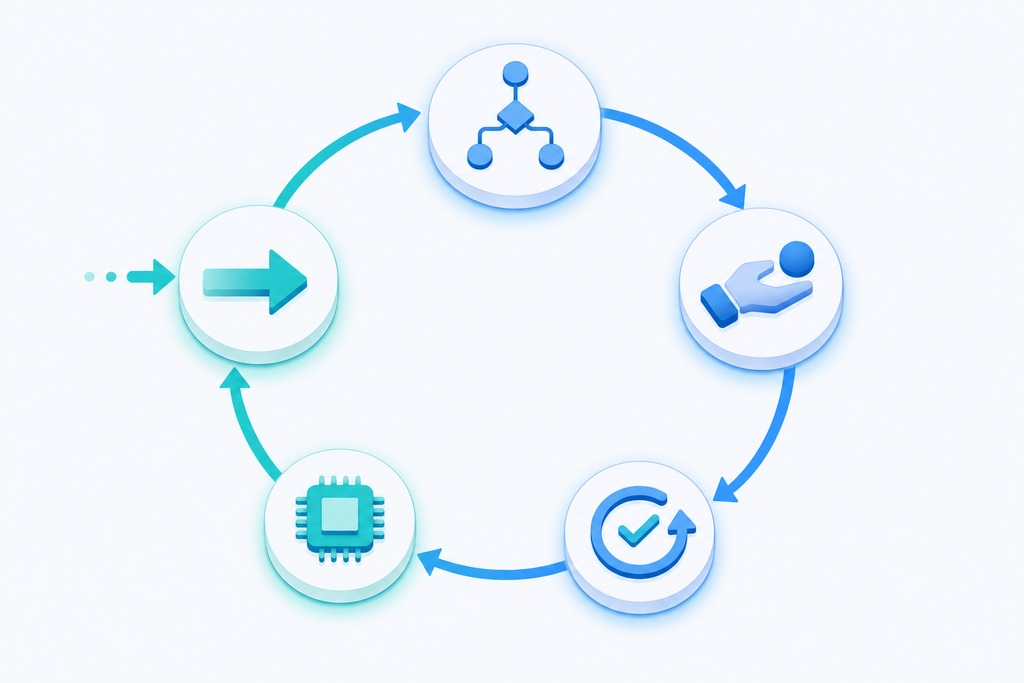
An agent runs a loop. It takes the goal you describe in plain, natural language, plans it into sub-tasks, acts using tools, checks each result, adjusts, and updates its memory. The model is the brain. The connected apps are the hands. And the memory is what makes the help feel personal.
- Takes your input: a typed or spoken request, a file, or on-screen context, plus the preferences it already has saved about you.
- Plans: breaks the goal into an ordered list of sub-tasks.
- Acts: uses tools to do each step: searches the web, fills a form, drafts a message, queries an app.
- Checks and adjusts: reads the result and retries or changes course if a step fails or new information appears.
- Updates memory: stores what happened so the next task goes smoother.
Prompt planning tool
See the token shape of an agent request
Paste the instruction you would give an agent. This is a planning estimate, not a billable tokenizer result.
English prose is estimated at about 4 characters per token.
Token-shaped chunks (an illustration, not exact tokenizer output)
Why are these only estimates? Read what a token actually is. Code, punctuation, and languages other than English can break the rule of thumb fast.
Say you tell it, "find a lunch time with Sam next week." The agent reads both calendars, finds the open slots you share, drafts an invitation, and, if you've authorized it to send on its own, sends it. If you haven't, it shows you the draft and waits. That last fork is the whole game. Acting on small steps by itself is fine. Acting on consequential ones without a check is not.
What It Can Do
Personal AI agents handle multi-step digital chores across most of your daily software: anything you can state as a goal and grant it access to. What any specific agent actually does depends on which apps you've connected and what permissions you've granted.
- Email and communication: sorts your inbox, drafts and summarizes replies in your tone, and can prepare social media posts
- Scheduling: books meetings, resolves calendar conflicts, and finds times that work for everyone
- Research and summarizing: browses sources, compares options, and condenses long documents and YouTube videos
- Shopping and booking: compares prices, reserves travel, and tracks orders
- Coding: writes, debugs, and tests software
- Personal finance: tracks spending, categorizes expenses, and flags anomalies
- Health and wellness: reads wearable data, suggests routines, and reminds you about medication
- Smart home: controls devices and runs routines
Across all of these, the safe pattern is the same. It can research, draft, and prepare freely. But anything that spends money, sends a message, or deletes something should wait for your approval.
Key Benefits
The real payoff is delegation instead of micromanagement. You hand over an outcome rather than steering every click. Four gains follow.
It saves time on repetitive admin: sorting mail, scheduling, and price comparisons that cost minutes each and hours a week.
It offloads mental tracking: the deadlines, preferences, and passwords you'd otherwise carry in your head.
It coordinates across apps that don't talk to each other. It acts as one hub between your calendar, inbox, and browser, instead of leaving you to copy details between them.
And it handles multi-step goals end to end, holding the thread across a dozen actions where a chatbot would stop after one.
Two smaller benefits round it out. An agent is available around the clock to monitor and remind. And it improves as it learns your habits and tone. Most competing explanations skip this entirely. But the benefits are the whole reason to bother, and they only arrive once memory and app access are switched on. A chatbot with neither gives you none of them.
The Main Players and the Market
The AI agent market was worth roughly $5.1 billion in 2023 and is projected to reach $65.6 billion by 2030, growing more than 45% a year. For an individual, though, the practical route in isn't a purchase. It's the assistant already built into your phone, PC, or browser. When people ask about "the big four," they mean OpenAI's ChatGPT, Microsoft Copilot, Google Gemini, and Apple Intelligence.
| Product | Maker | Type | Key detail or price |
|---|---|---|---|
| ChatGPT | OpenAI | Software | Browses the web and acts via tools; memory and app connections optional |
| Copilot | Microsoft | OS-level | Built into Windows 11 and the Edge browser |
| Gemini | OS-level | Built into Android; multimodal, reads screen context | |
| Apple Intelligence | Apple | OS-level | Launched 2024; on-device plus Private Cloud Compute; works through Siri |
| Rabbit R1 | Rabbit | Hardware | $199; ~50,000 units sold in first few weeks; uses a "Large Action Model" |
| Humane AI Pin | Humane | Hardware | $699 plus $24/month; screenless, projects a display onto your palm |
| AutoGPT, BabyAGI, Devin | Various | Experimental | Developer-facing projects, not consumer products |
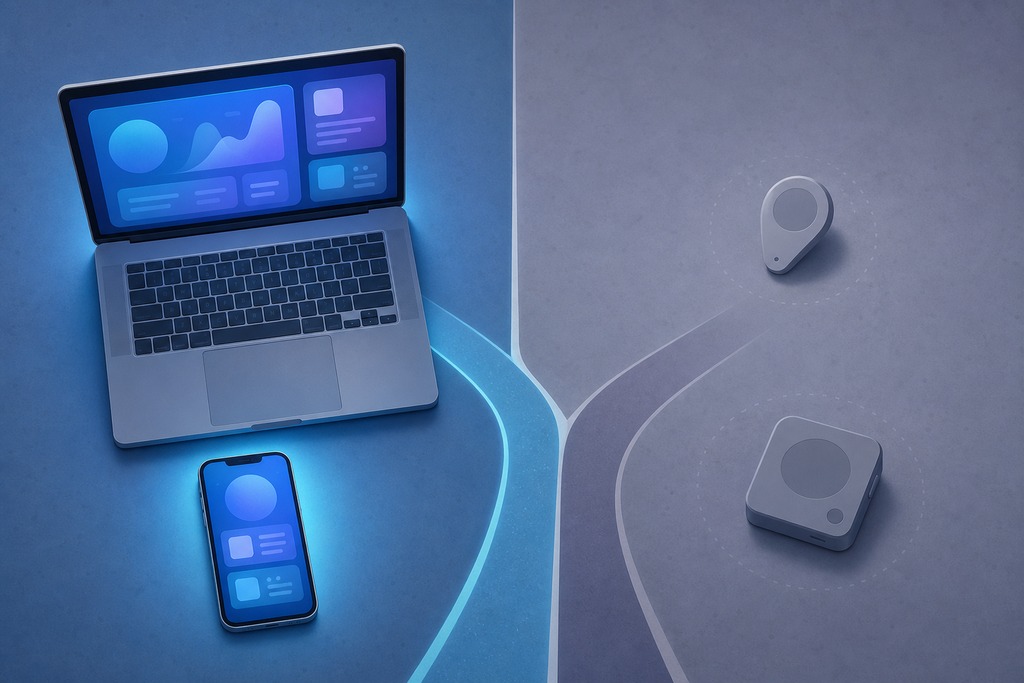
The dedicated hardware, the Rabbit R1 and the Humane AI Pin, is early and unproven. The category has yet to show it beats the phone already in your pocket. You do not need a dedicated gadget to use a personal AI agent. The open-source projects are aimed at developers building their own agents, not everyday users.
How to Get Your Own
You almost certainly already have access. The agent abilities are being added to software you use. So "getting one" mostly means switching features on and connecting accounts: gradually.
- On Windows or Office: Microsoft Copilot is already built in
- On iPhone or Mac: Apple Intelligence works through Siri on recent models
- On Android: Google Gemini is built into the system
- On the web: ChatGPT acts as an agent once you enable memory and tools
- Then, on any of them: turn on memory, connect the accounts you want it to use, and grant permissions one at a time
Setup differs by platform and changes often. So treat the above as the shape rather than a script: check your vendor's current instructions for the exact toggles. The one rule that holds everywhere: grant access one account at a time, and revoke anything you don't actively need.
Risks and Limitations
An agent's mistakes cost more than a chatbot's because a wrong assumption becomes a real action. When a chatbot hallucinates (makes something up), you get a bad sentence. When an agent hallucinates, you get the wrong flight booked, the wrong file deleted, or the wrong contact emailed. Same error, very different stakes.
Three limitations follow.
Privacy is the first. To be useful, an agent needs deep access to sensitive data (email, files, location, sometimes finances) and that access is exactly what makes a leak or misuse costly. The concern is real, not marketing caution.
Second, reliability tracks the weakest link. An agent is only as dependable as the model reasoning for it and the tools it's wired to. A flaky connection breaks a task as surely as a bad guess.
Third, setup is fiddly. Wiring an agent cleanly into a dozen separate accounts and services is still awkward.
And the honest answer to "can I trust it to act unsupervised on important things?" is still largely no. These systems make mistakes. In an agent, a mistake is an action, not just a wrong sentence — which is why oversight on consequential steps isn't optional yet.
Who Should NOT Rely on One
Don't hand a personal AI agent unsupervised control over anything consequential — money, legal or medical decisions, irreversible file operations, or messages you can't unsend. Autonomy on small steps is not the same as trust on high-stakes ones. And no agent in 2026 is reliable enough to close that gap.
Skip it, too, if you're only willing to grant blanket account access up front rather than opening permissions one at a time and revoking what you don't use — that's the setup most likely to hurt you. If you're shopping for "the" personal AI agent as a single boxed product, stop looking. It doesn't exist as one thing. And the dedicated gadgets are the weakest place to start. They're early, unproven, and haven't shown they do anything your phone can't.
Staying in Control
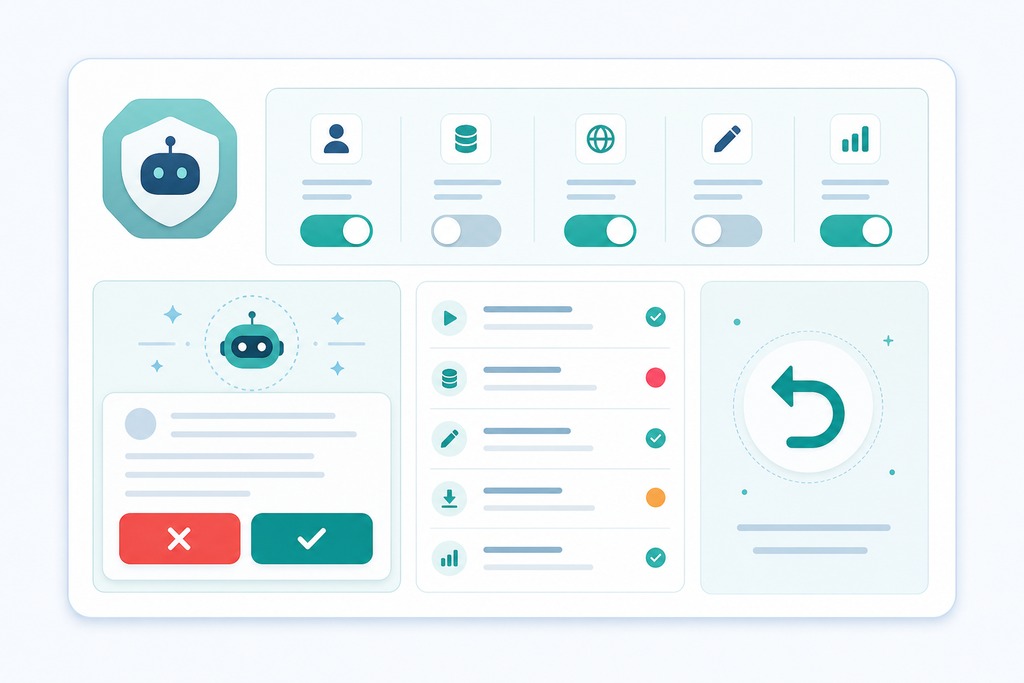
A trustworthy agent gives you the controls to hold it accountable — and the absence of any item below is a reason to withhold access. Use this as a checklist for any vendor.
- Explicit permission controls — you decide what it can touch
- Confirmation before consequential actions — spending, sending, or deleting waits for your yes
- Limited access to sensitive systems — finances and private files stay walled off unless needed
- Activity logs — a record you can review of what it did
- Reversible operations — actions you can undo
- Control over stored memory — you can see, edit, and delete what it remembers about you
FAQ
What can personal AI agents do?
They handle multi-step digital tasks you can describe as a goal: sorting and drafting email, scheduling meetings, researching and summarizing, comparing prices and booking travel, writing and debugging code, tracking spending, reading wearable data, and controlling smart-home devices. What any one agent actually does depends on which apps you've connected and what permissions you've granted.
Is ChatGPT an AI agent?
It depends on configuration. With memory on and tools connected, web browsing and the ability to act on sites or in linked apps, ChatGPT behaves as an agent. As a plain question-and-answer box with those features off, it's a chatbot. The same product sits on either side of the line depending on what's switched on.
How do I get my own personal AI agent?
You likely already have access. Microsoft Copilot ships in Windows 11 and Office, Apple Intelligence works through Siri on recent iPhones and Macs, Google Gemini is built into Android, and ChatGPT becomes agent-like once you enable memory and tools. Getting started means turning those on, connecting your accounts, and granting permissions gradually.
Who are the big 4 AI agents?
For consumers, the four most-asked-about are OpenAI's ChatGPT, Microsoft Copilot, Google Gemini, and Apple Intelligence. Each is an assistant built into a major platform that's gaining agent abilities (acting, remembering, and using your apps) rather than a separate product you buy.
References
- IBM, "AI Agents vs. AI Assistants." https://www.ibm.com/think/topics/ai-agents-vs-ai-assistants
- Google Cloud, "What are AI agents?" https://cloud.google.com/discover/what-are-ai-agents
- Coalfire, "Navigating the Era of Personal AI Agents." https://coalfire.com/the-coalfire-blog/navigating-the-era-of-personal-ai-agents