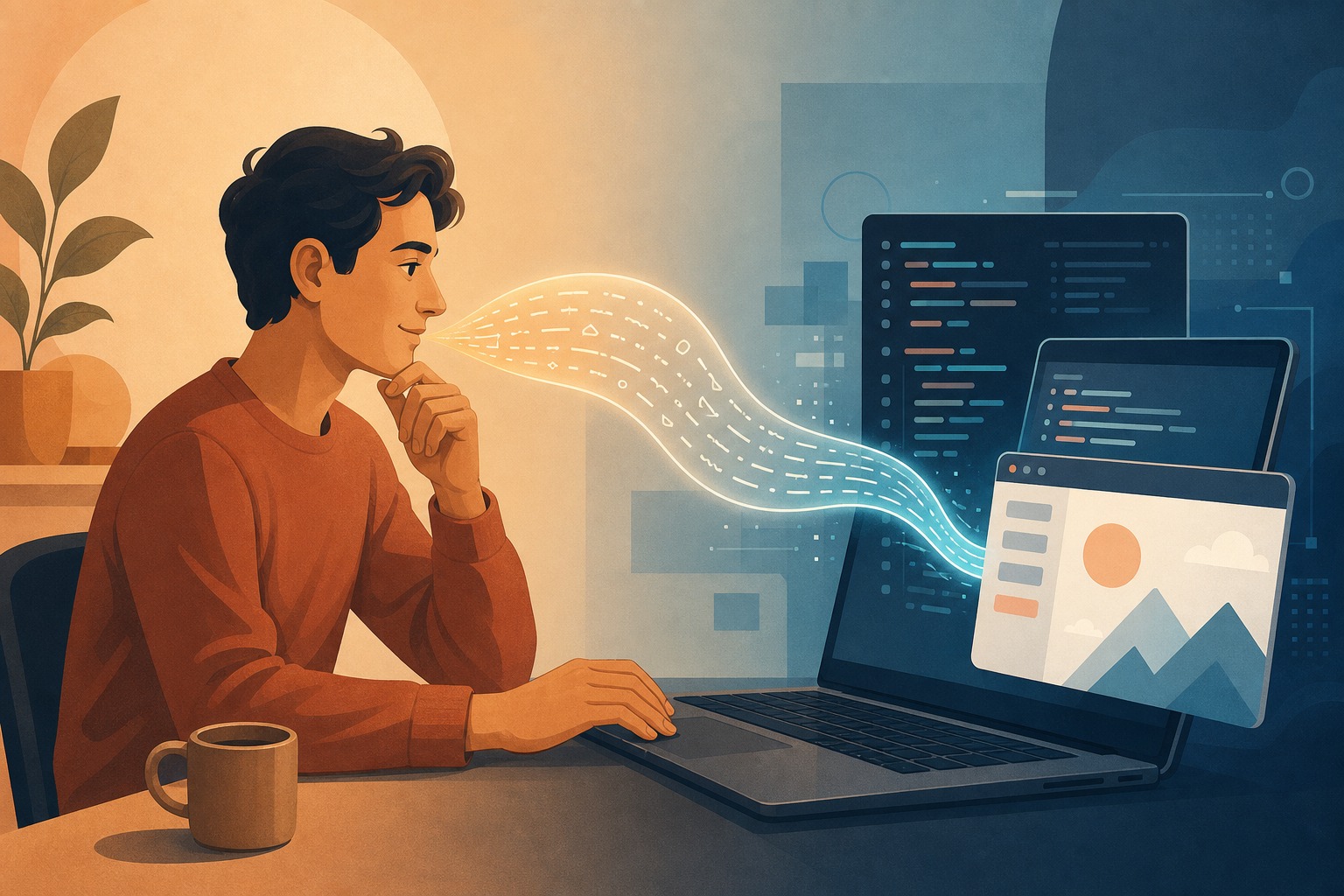
Half the coverage calls vibe coding the fastest way to ship software. The other half calls it a security disaster waiting to happen. Both are right: and the confusion clears up the moment you see what they're actually arguing about.
Vibe coding means describing what you want in plain language and letting an AI write and revise the code: often without reading a single line it produces. It's real, and it's genuinely fast: days of scaffolding can appear in an hour. It's also the wrong tool the moment real users, money, or private data are involved, and for the exact reason it feels fast: nobody understands the code.
That one point clears up most of the confusion. What people call "vibe coding" is often just using AI to help write code they still read and own: a different, safer activity. Strict vibe coding means giving up review on purpose. Keep the two apart and the "when is it safe" question answers itself: use it where nothing breaks if the code is wrong, and switch to reviewed work the moment something does.
What Vibe Coding Actually Is
Vibe coding is a way of building software where you describe the result you want to an AI, accept the code it writes, and refine by conversation instead of editing lines yourself. Andrej Karpathy, an OpenAI co-founder and former director of AI at Tesla, named it in a February 2, 2025 post on X.
"There's a new kind of coding I call 'vibe coding,' where you fully give in to the vibes, embrace exponentials, and forget that the code even exists."
Karpathy described "seeing stuff, saying stuff, running stuff, and copy-pasting stuff." You accept suggested changes without reading the diffs, and paste error messages back for the model to fix. He framed it as good for "throwaway weekend projects": a detail most coverage drops. The core traits stay the same across every description: natural-language prompts as the main input, accepting output on trust, iterating through conversation, and speed over line-by-line understanding.
The phrase went mainstream within months. Merriam-Webster added "vibe coding" as slang and trending, and Collins Dictionary named it Word of the Year for 2025. But popularity isn't maturity: the term spread far faster than the practice of doing it safely.
Vibe Coding vs. AI-Assisted Engineering
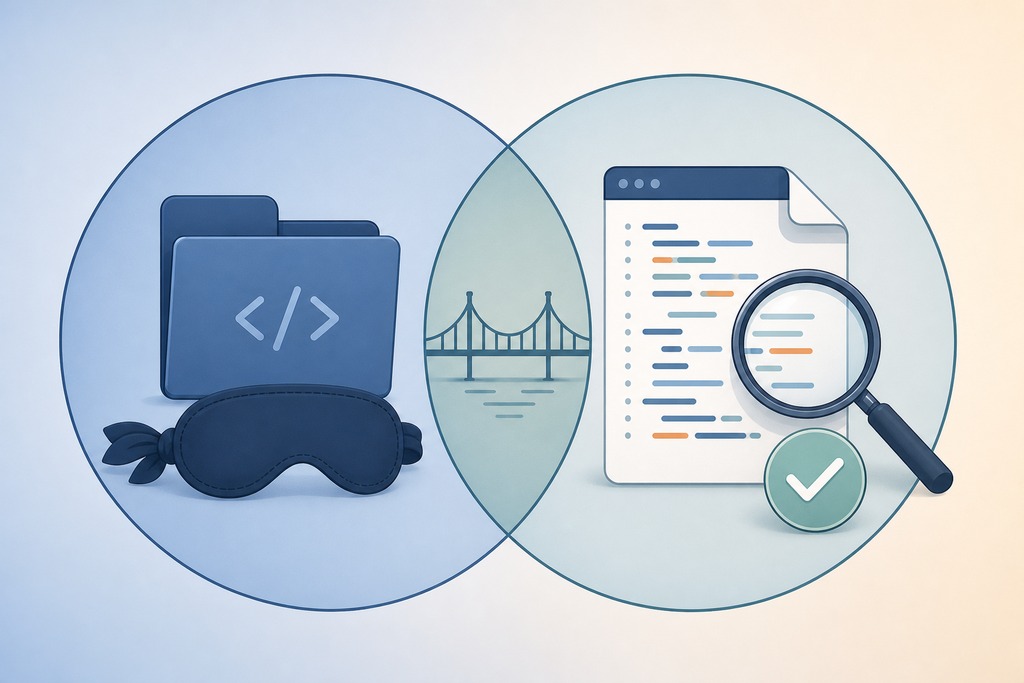
The difference comes down to whether anyone reads and owns the code. Vibe coding judges software by whether it runs. AI-assisted engineering judges it by whether a developer understands and can defend how it runs. This distinction is the whole topic, which is why it comes before the tools and tips.
| Aspect | Vibe coding | AI-assisted engineering |
|---|---|---|
| Code review | Minimal or none | Reviews the code that matters |
| How you judge it | By visible behavior: does it run? | By diagnosing the underlying cause |
| Understanding of the code | Partial or none | Retains architectural understanding |
| Accountability | "Forget the code exists" | The developer owns the code |
| Skill required | Low barrier to entry | Software engineering knowledge |
| Best fit | Low-risk prototypes and demos | Production systems with controls |
A professional engineer who prompts an AI, reads the output, and rewrites the risky parts isn't vibe coding in the strict sense: she's engineering with a faster keyboard. Don't let the buzzword swallow that. The moment you start reading and owning the code, you've left the left-hand column.
How the Workflow Actually Runs
The loop is short and repetitive: describe, generate, run, feed back the error, repeat. In practice the rhythm becomes "see the broken screen, describe the fix, accept the change": you rarely open the files.
- Describe the app or feature in plain language.
- Let the AI tool create or modify the files.
- Run it.
- Feed back what happened: the error text, the logs, or a screenshot of the broken screen.
- Iterate until it behaves the way you wanted.
- Deploy: ideally after testing and a review.
Step 6 is where vibe coding either stays honest or turns dangerous. Deploy a personal habit tracker straight from step 5, and the worst case is a wasted afternoon. Deploy a login and payment flow the same way, and you've shipped code no human has verified.
The Tools That Make It Possible
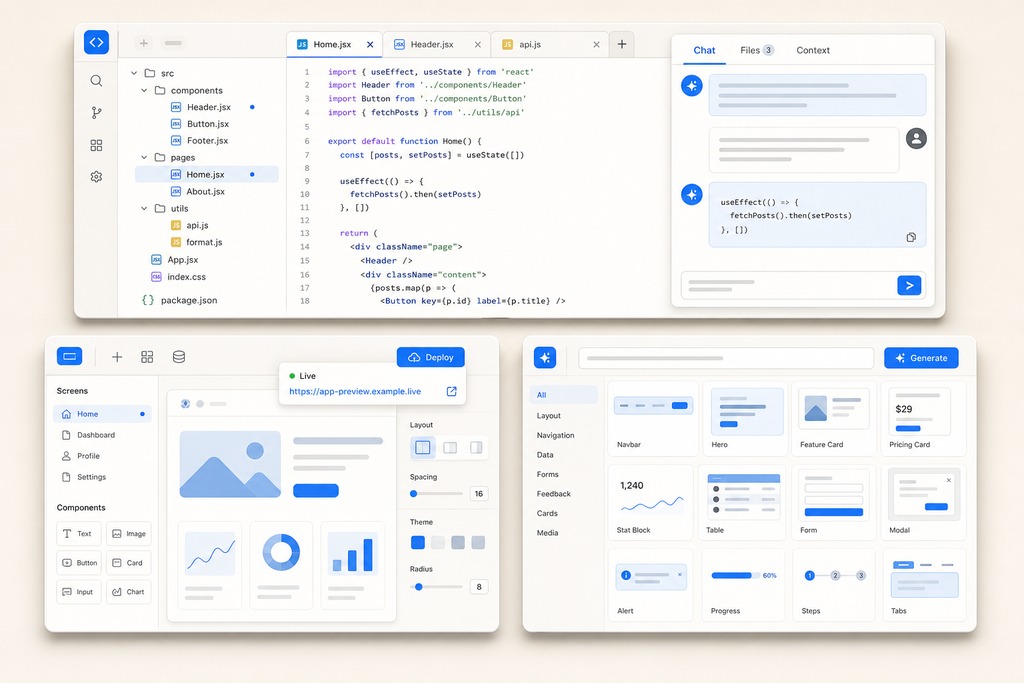
A generation of AI-native editors and browser builders make the loop possible, and they differ in how much they hide. Some keep you inside a codebase; others deploy a full app from a single prompt.
| Tool | What it is | Notable detail |
|---|---|---|
| Cursor | AI-native editor forked from VS Code, with whole-codebase chat and multi-file generation via Composer | Parent company Anysphere was valued at over $900 million in 2024 |
| GitHub Copilot | In-editor AI pair programmer | Over 1.8 million paid subscribers in 2024; a GitHub study found tasks completed up to 55% faster |
| Replit Agent | Browser tool that scaffolds and deploys full apps from a prompt | Handles hosting inside the browser |
| Bolt.new | Browser-based full-stack app builder | Generates and runs the app end to end |
| Lovable | App builder from a text description | Aimed at non-programmers |
| Vercel v0 | Generates UI from prompts | Outputs ready-to-use React/Tailwind code |
| Windsurf (Codeium) | AI-native IDE | Whole-project context awareness |
| Claude / Claude Code, ChatGPT / OpenAI Codex | Conversational code generation | General-purpose models used to write and revise code |
The tools that deploy for you (Replit Agent, Bolt.new, Lovable) are the fastest to a live URL and the easiest to misuse, because they make skipping review feel like a feature rather than a decision.
What It's Genuinely Good For
Vibe coding shines when speed matters more than durability and a failure costs nothing. Its strongest uses share one trait: no real users, money, or private data are on the line.
- Rapid prototypes, proofs of concept, and MVPs
- Personal tools, small scripts, and one-off automations
- Landing pages and simple applications
- Exploring an unfamiliar framework
- Generating boilerplate and routine tests
- Hackathons and demos
- Helping non-programmers turn an idea into a working demo
- Learning by seeing working examples
The honest ceiling: a prototype that once took days can appear in hours, but hardening it for production (closing edge cases, securing it, making it maintainable) can take far longer than building it did. The speed is front-loaded. The bill for skipping understanding comes due later.
Where It Goes Wrong
Vibe coding didn't "fail" as a technique: it fails when people use it where its defining trait, nobody reads the code, becomes a liability. The 2025 incidents that made headlines weren't verdicts on the method. They were the method used for production, security, and money.
The clearest warning came in 2025, when a vibe-coded SaaS product was attacked within days of its creator publicly noting he'd built it without security expertise. That's the pattern in miniature. AI-generated authentication, permissions, and database code can be quietly unsafe (open to SQL injection, cross-site scripting, or hardcoded secrets) and 2025 saw a run of leaked API keys and insecure deployments from exactly this workflow. The model doesn't inherently know security best practices; it produces code that looks right.
Looking right is the core problem. Models hallucinate APIs that don't exist and write logic that passes the demo but breaks on the first unusual input. Because no one understands the code, debugging turns into a guessing game: you paste errors back until the symptom disappears. Repeated prompting also produces "AI spaghetti": duplicated, inconsistent structure that no human can untangle, which is technical debt piling up at machine speed. And when nobody understands the system, you get an accountability gap: when it breaks in front of a customer, who owns the failure? There are quieter costs too — inefficient database queries and cloud configs that run up unexpected bills, questions about who owns the intellectual property of AI-generated code, and skill atrophy from never reading what you ship.
The tension under all this shows up in the data. Stack Overflow's 2024 developer survey found more than 70% of developers using or planning to use AI tools — while many named code quality and maintainability as their top concern. People are adopting the speed and worrying about the substance at the same time, which is the right instinct.

How to Vibe Code Safely
Safe vibe coding comes down to one rule with teeth: use it unreviewed only for low-stakes work, and review everything else before it ships. "It runs" is not the same as "it's secure, correct, and maintainable." Anything touching data, authentication, or payments crosses out of vibe-coding territory and into reviewed engineering — whether or not you kept using the same tool.
- Keep the project under version control from the first prompt.
- Ask for small, reviewable changes instead of one giant "build the app" request.
- Require automated tests and let them decide whether a change is good.
- Validate authentication and authorization separately, by hand.
- Scan dependencies and secrets before deploying.
- Review database migrations and any destructive operations line by line.
- Use a staging environment before production.
- Have an experienced developer inspect security-critical code.
- Keep backups and a rollback plan.
- Treat the AI as a collaborator, not an unquestioned authority.
Tips for More Effective Vibe Coding
Better output comes from better inputs and smaller steps. The most common reason a session spirals into unfixable code is a prompt that asked for too much at once, with too little context.
Give the model the relevant files, name the framework and version, and state the constraints up front — an AI that can read your existing structure writes code that fits it. Ask for one change at a time and run it before requesting the next, because a big batch of generated code is a big batch of bugs to isolate.
Let tests be the judge. Have the AI write unit tests alongside the feature, then decide whether the "vibe" is right by whether they pass — not by whether the screen looks correct. When you hit an error, paste the exact stack trace back, not "it's broken," because the specific error is what lets the model fix the specific cause.
And when the model gets stuck in a loop of broken fixes, stop feeding the mess back to it. Start a fresh conversation with a clean description of what you want. Version control makes all this safe to experiment with, since you can always roll back to the last working state.
Who Should NOT Vibe Code
Skip unreviewed vibe coding entirely if your app handles logins, payments, user data, or destructive database operations — that's exactly where the 2025 security incidents came from. A non-programmer can build a genuinely impressive demo this way, and should feel free to. But the same person shouldn't ship a data- or money-handling app that no one has reviewed. Teams maintaining a long-lived codebase shouldn't accept code no member understands, because the person debugging it at 2 a.m. inherits every shortcut the model took. Regulated environments (health, finance, anything with a compliance obligation) need reviewed, owned code by definition. The test is simple: if you can't review the output and something real breaks when it's wrong, don't ship it vibe-coded.
Is "Vibe Coder" a Real Job?
Vibe coding is a real skill and a real workflow, but "vibe coder" as a standalone job title overstates it. What's real is a shift in the developer's role — away from writing every line and toward directing, reviewing, and specifying. Think closer to a product manager who can read code than to a typist. The barrier to building software has genuinely dropped, which is why designers, founders, and non-programmers can now produce working prototypes in an afternoon.
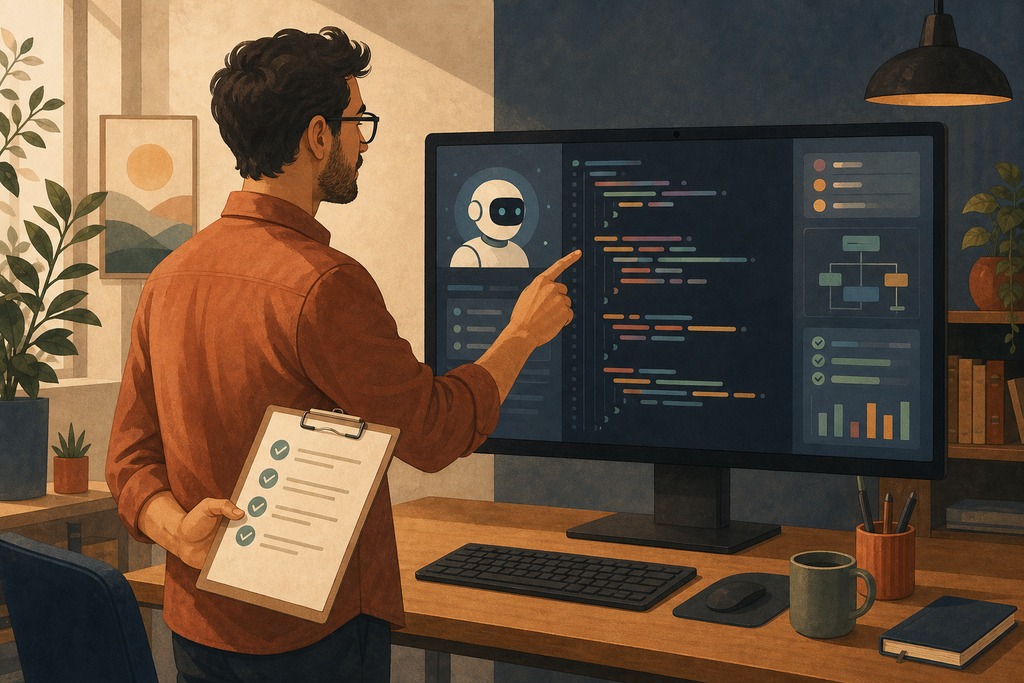
That shift has reopened an old debate about what "programmer" means and whether understanding code still matters. The durable answer: lowering the barrier to build something is not the same as lowering the bar to ship something safe. The value doesn't sit with treating AI as a full replacement for engineering. It sits with the people who can tell when the vibes are enough and when they're not — and who know that line moves the instant real users, money, or data show up.
FAQ
What exactly is vibe coding?
Vibe coding is building software by describing what you want to an AI in plain language and accepting the code it writes, often without reading it. Andrej Karpathy coined the term in a February 2025 post, describing a workflow where you "forget that the code even exists" and fix bugs by pasting errors back to the model. It's fast for prototypes and risky for anything real.
Why did vibe coding fail?
It didn't fail as a technique — it fails when pushed outside its zone. The 2025 headlines about leaked API keys and hacked apps came from people using unreviewed AI code for production, authentication, and payments, where "nobody reads the code" becomes a liability rather than a shortcut. Used for prototypes and throwaway projects, it works exactly as intended.
Is vibe coding better than coding?
That's the wrong comparison. Vibe coding and traditional engineering are different tools for different stakes, not a ranking. Vibe coding wins for speed on low-risk prototypes; reviewed engineering wins for anything with users, money, or private data. The right question isn't which is better but which the job needs.
Is vibe coding a real job?
The workflow and the skill are real, but "vibe coder" as a standalone job is overstated. The lasting value belongs to people who can judge when the AI's output is good enough and when it must be reviewed — which is still engineering judgment.
References
- Andrej Karpathy, X (formerly Twitter) post introducing "vibe coding," February 2, 2025.
- Merriam-Webster, dictionary entry for "vibe coding" (slang & trending).
- Collins Dictionary, Word of the Year 2025.
- GitHub, Copilot research on developer task completion speed and subscriber figures.
- Stack Overflow, 2024 Developer Survey (AI tool adoption and code-quality concerns).
- Anysphere / Cursor company reporting on 2024 valuation.