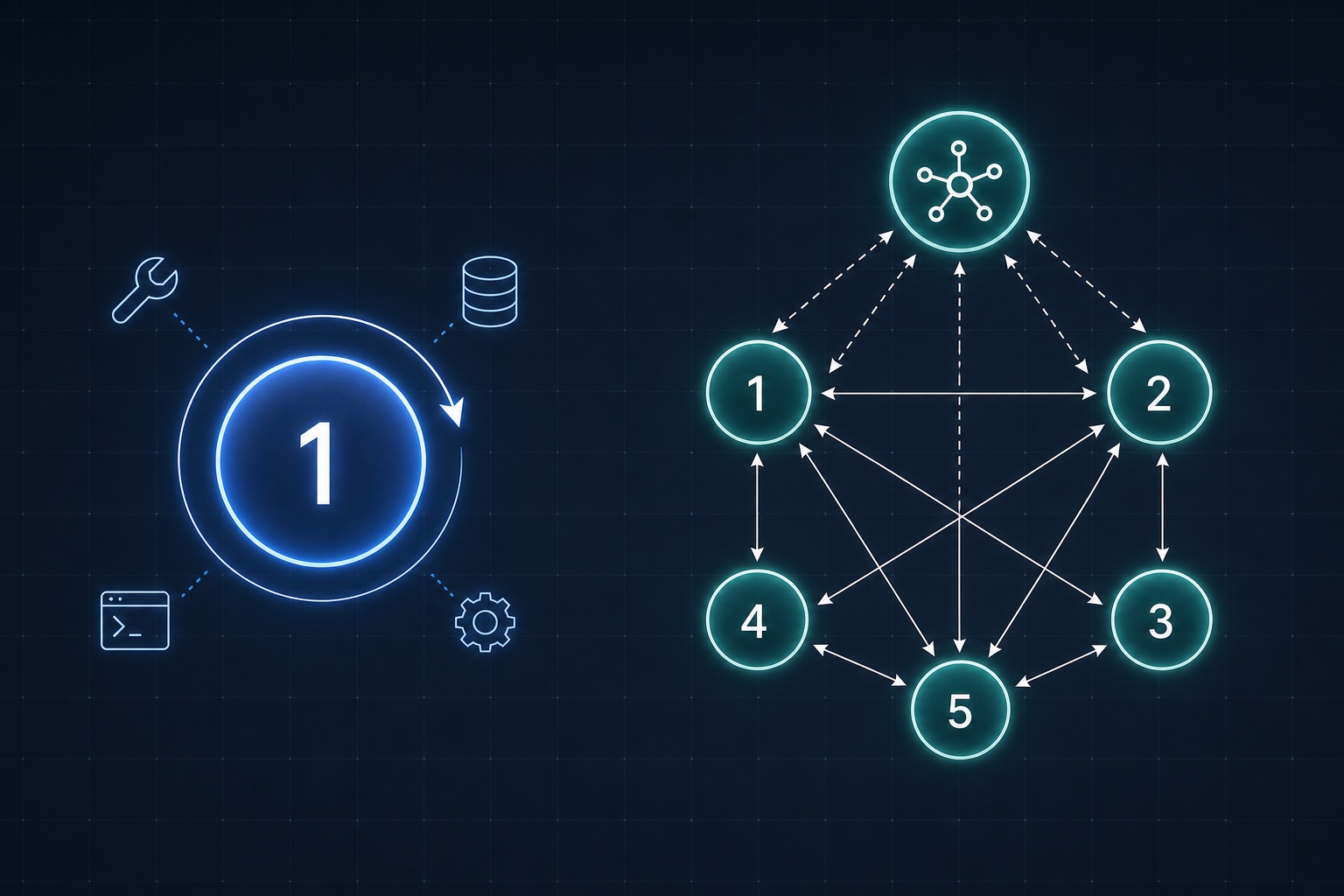
Deciding between multi-agent systems vs single AI agents comes down to one rule: start with one agent, and add more only when the task forces you to. A single agent, one model running a plan-and-act loop, is cheaper, faster, and far easier to debug, and it handles the large majority of production work. Multiple coordinating agents buy you parallelism, specialized roles, and independent checking, but they cost roughly 4 to 15 times the tokens and 10 to 50 times the model calls to get there. That's a trade, not an upgrade.
Most people assume multi-agent is the advanced tier you graduate to: more agents, more intelligence, better answers. The evidence says otherwise. On straightforward tasks, single agents match or beat multi-agent setups; extra agents add coordination and failure surface, not guaranteed quality. So the real question isn't which architecture is more powerful. It's whether your task breaks apart cleanly enough to justify the overhead. This guide gives you the numbers and the decision procedure to answer that for your own case.
What each one actually is
A single AI agent is one large language model (LLM), the text-prediction engine behind systems like GPT-4 or Claude, wrapped in a loop that lets it plan, call tools, read the results, and try again until the task is done. The most common form of that loop is ReAct, short for reason + act: the model writes a thought, takes an action such as a web search or a code execution, observes the output, then repeats. It has one context window, one set of tools, and one memory. A standard ChatGPT session or a single coding-assistant instance is a single agent.
A multi-agent system runs several of these agents together, each with its own context, prompt, tools, and sometimes its own model. They coordinate through an orchestrator that hands out subtasks, a shared memory both sides can read and write, or direct messages passed between agents. The point isn't more brains for their own sake. It's that each agent can specialize on a narrow role, work in parallel on an independent slice, or check another agent's output before it becomes the final answer.
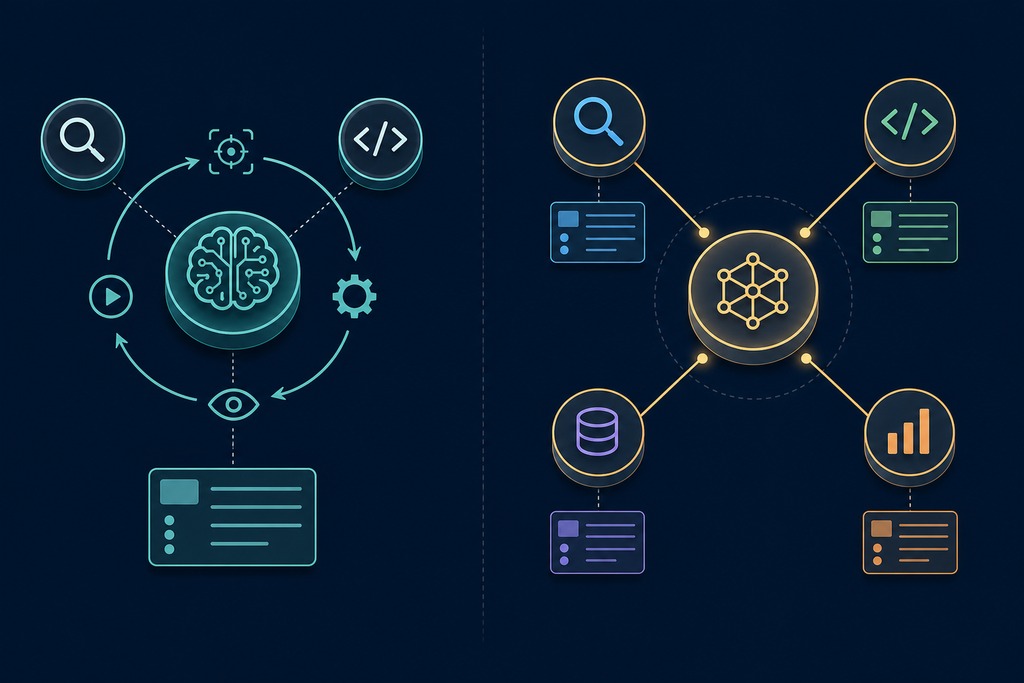
Single AI Agents vs. Multi-Agent Systems (MAS)
Strip away the labels and the difference is organizational, not technological. Both are built on the same kind of underlying model — the split is in how many independent decision-makers own the task at once. A single agent keeps one reasoning loop in charge end to end: one entity choosing each next action, holding the plan, and answering for the result. A multi-agent system — MAS, as the research literature abbreviates it — hands that authority to several loops, each making its own local choices that then have to be reconciled into a single output.
Naming that axis is what makes the rest of this guide cohere. The cost, latency, and reliability differences aren't separate dials you tune one by one; they all move together the instant the work goes from one owner to many. So when MAS turns up in the failure studies and framework docs below, read it structurally: a team of loops that must agree, not a single loop that simply decides.
The core trade-offs, side by side
A single agent wins on cost, speed, and simplicity; a multi-agent system wins on parallelism, specialized roles, and context capacity: and it pays for each of those with more tokens, more latency, and harder debugging. Here is the head-to-head across the dimensions that actually decide the architecture.
| Dimension | Single AI Agent | Multi-Agent System |
|---|---|---|
| Architecture | One monolithic plan-act loop | Distributed, specialized agents |
| Task complexity | Low to moderate | High to extreme, if it decomposes |
| Token / compute cost | Low (baseline) | High (4–15×) |
| Latency | Lower (~2–5s for simple tasks) | Higher (minutes) |
| Parallelism | Limited | Strong |
| Context capacity | One window; degrades past 128k–1M tokens ("lost in the middle") | Distributed, focused contexts per agent |
| Reliability | Single point of failure | Can cross-check, but errors can cascade |
| Debuggability | Linear trace, easy to inspect | Branching, nondeterministic |
| Engineering effort | Low | High (orchestration, state, evals) |
| Best for | Focused, sequential work | Broad, decomposable, parallel work |
The "lost in the middle" note matters more than it looks: even models advertising 128k to 1M token windows retrieve facts buried in the middle of a long context less reliably than facts at the start or end. That degradation, not a hard cap, is what pushes very large tasks toward distributed contexts.
Single AI agents: where they win
A single agent is the correct default for most tasks in 2025–2026, and not because it's a compromise. For focused, single-domain work it is the better engineering choice: one linear trace to inspect, one bill to watch, one place a bug can hide.
Pros
- Lowest cost: one reasoning loop, no context duplicated across agents
- Lowest latency: a single round-trip, roughly 2–5 seconds for simple tasks
- Linear, inspectable trace that makes debugging straightforward
- Consistent reasoning inside one shared context
- Simplest to build, test, and secure with one permission set
Cons
- Bounded by one context window (128k–1M tokens), with retrieval degrading as it fills
- No true parallelism, so long sequential work can be slow
- One wrong assumption early can taint the entire run: a single point of failure
- A generalist can underperform specialists on niche subtasks
Verdict: Best for latency-sensitive, cost-constrained, single-domain work: customer support bots, summarization, single-domain retrieval-augmented generation (RAG), well-scoped code changes, and anything still in prototyping.
Multi-agent systems: where they earn their cost
Multiple agents earn their overhead on work that genuinely breaks apart. Anthropic reported that its multi-agent research system beat a single-agent version by about 90% on breadth-first research evaluations: the kind where you fan out across many independent sources at once. Microsoft Research has reported gains of 15–40% on some complex reasoning benchmarks. Those wins come from decomposition, not from adding brains.
Pros
- Real parallelism on independent subtasks, such as "research these 10 companies at once"
- Context relief: each agent holds a focused slice instead of one overflowing window
- Specialization: distinct prompts, tools, even different models per role (a cheap model to route, a strong model to reason)
- Independent verification: a critic or guardrail agent reviews another agent's output
- Fault isolation: one failing worker need not crash the whole run
Cons
- 4–15× the tokens and 10–50× the model calls of a single agent
- High latency: coordination turns seconds into minutes
- Errors can cascade across handoffs, not just isolate
- Nondeterministic runs that are hard to reproduce and test
- Shared state and a wider security surface to manage
Verdict: Best for broad, decomposable, parallel work: research synthesis, multi-domain tasks combining code, tests, and review, and high-stakes analysis where independent checking justifies the bill.
Multi-agent patterns in practice
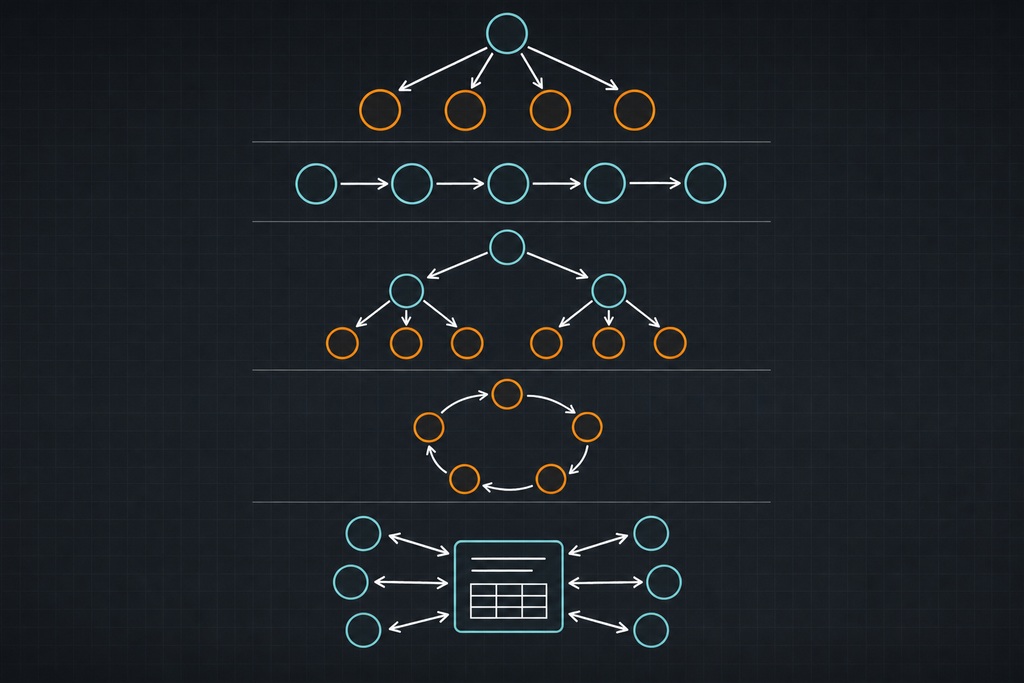
Multi-agent isn't one design; it's a handful of coordination patterns, each suited to a different shape of problem. Knowing which pattern you'd reach for is half of knowing whether you need one at all.
| Pattern | How it works | Typical use |
|---|---|---|
| Orchestrator / Manager–Worker | A lead agent decomposes a task and dispatches subtasks to workers, then aggregates results | Breadth-first research, complex coding |
| Sequential pipeline | Agents run in a fixed chain, each transforming the prior output | Document processing, ETL, research → write → edit |
| Hierarchical | Manager tiers supervise sub-managers and workers | Large-scale automation, simulated software teams |
| Debate / critique / ensemble | Several agents solve the same problem; results are voted on or critiqued | Accuracy-critical reasoning, fact-checking |
| Blackboard / shared-state / swarm | Agents read and write a common memory asynchronously | Simulations, planning |
The hierarchical and pipeline patterns are what systems like ChatDev and MetaGPT use to imitate a software company: a Product Manager agent writes the spec, an architect designs the change, a developer writes code, a QA agent tests it, a security agent reviews it, and a coordinator reconciles the results. That structure only helps when those stages can proceed with real independence: for a one-line bug fix, the same handoffs are pure overhead.
Where multi-agent bites you
Multi-agent systems fail in ways single agents can't, and the failures are documented, not hypothetical. A 2025 UC Berkeley study titled "Why Do Multi-Agent LLM Systems Fail?" catalogued breakdowns across specification, inter-agent misalignment, and verification: failures that live in the seams between agents rather than inside any one of them. Cognition, the team behind the Devin coding agent, named its influential guidance bluntly: "Don't Build Multi-Agents." Their argument for coding is that a single agent with excellent context beats fragile handoffs where one agent loses what another knew.
The recurring failure modes:
- Error compounding: a mistake by an early agent propagates and amplifies downstream
- Coordination failures: agents duplicate work, contradict each other, or deadlock waiting on one another
- Context fragmentation: something one agent knows never reaches the agent that needs it
- Nondeterminism: the same input takes different execution paths, so bugs are hard to reproduce
- Shared-state complexity: syncing and persisting common memory is a distributed-systems problem
- Wider attack surface: more agents mean more entry points for prompt injection
- The blunt fact: more agents do not automatically mean more accuracy
Fault isolation is not fault tolerance. A contained worker failure is one outcome; a cascade across handoffs is the equally likely other. A single agent's "single point of failure" is not automatically the worse risk.
Weaknesses
The sections above lay out where each architecture is fragile on its own. Some weaknesses, though, follow you from one agent to many — the architecture choice doesn't touch them, so it's worth naming them before you assume more structure will help.
- The base model is the ceiling. Wrapping one loop or coordinating several adds no reasoning the underlying model lacks. A task beyond the model's competence stays beyond it; more agents just spend more to arrive at the same wall.
- Tools and data are load-bearing. Every agent acts through the same external systems — search, retrieval, code execution — and inherits whatever they return. A stale index or a failing API sinks the run no matter how the agents are arranged.
- Judgment stays with the human. An agent executes a plan; it doesn't decide whether that was the right plan or confirm the finished answer is actually correct. Automating the work never automates the responsibility for defining "done" and checking it.
None of these are reasons to avoid agents. They're the reasons that adding another agent is rarely what rescues a system that's underperforming: the problem usually sits in one of these three places, not in the agent count.
Who should not build a multi-agent system
Stay single-agent if any of these describes you: the coordination tax will cost more than it returns. This is the honest "no" case, and it covers a lot of real projects.
- You're still prototyping or shipping an MVP, where speed of iteration beats architecture
- Your task is well-scoped and single-domain: a support bot, summarization, single-domain RAG, or a bounded code change
- Cost or latency is a hard constraint: coordination turns seconds into minutes and multiplies the token bill
- Your subtasks are tightly coupled, constantly referencing each other's intermediate state, so splitting them loses information
- You lack the observability and evaluation tooling to trace nondeterministic, branching runs
The real cost gap, in numbers
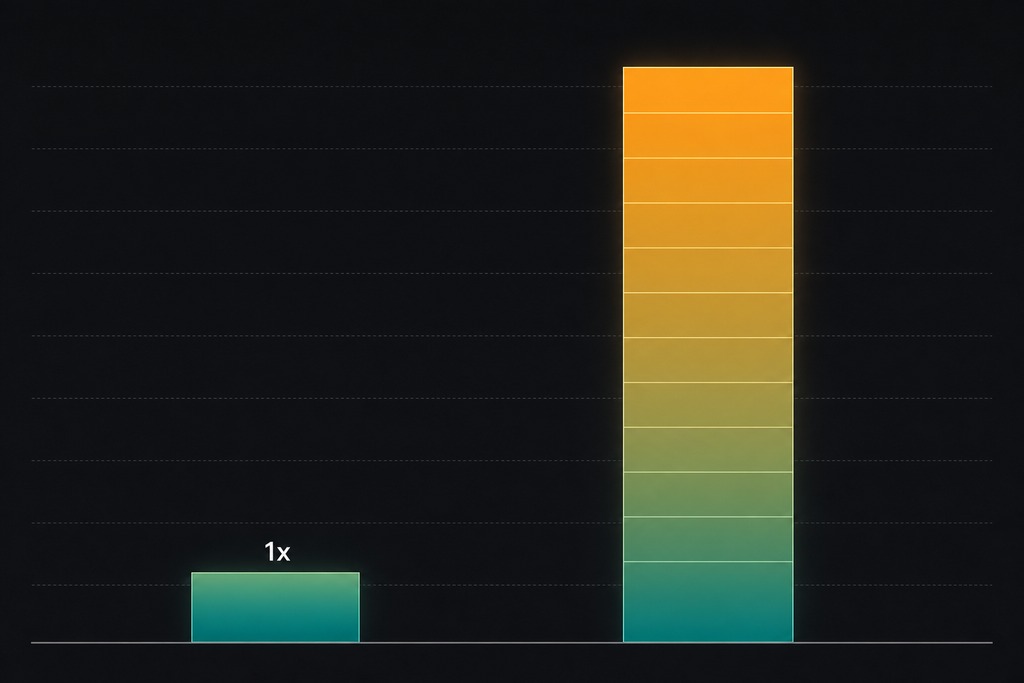
The jump from one agent to several is not a modest markup: it's a multiplier, and feeling the size of it is what keeps the decision honest. Reported ranges vary by source (3–10×, 5–10×, 4–15×), and Anthropic put its own research system at roughly 15×.
| Metric | Single Agent | Multi-Agent System |
|---|---|---|
| Model calls per task | 1–3× | 10–50× |
| Token consumption | Baseline (e.g., ~5,000 tokens for one task) | 4–15× overall (25,000–40,000 for a 3-agent system with a review loop) |
| Typical latency | Seconds (~2–5s) | Minutes |
The token math compounds because the output of one agent becomes the input prompt of the next. A three-agent pipeline doesn't just triple the work; each handoff re-injects context, and a review loop pays that cost again on every pass. That's the mechanism behind the 5,000-to-40,000-token jump.
How to decide
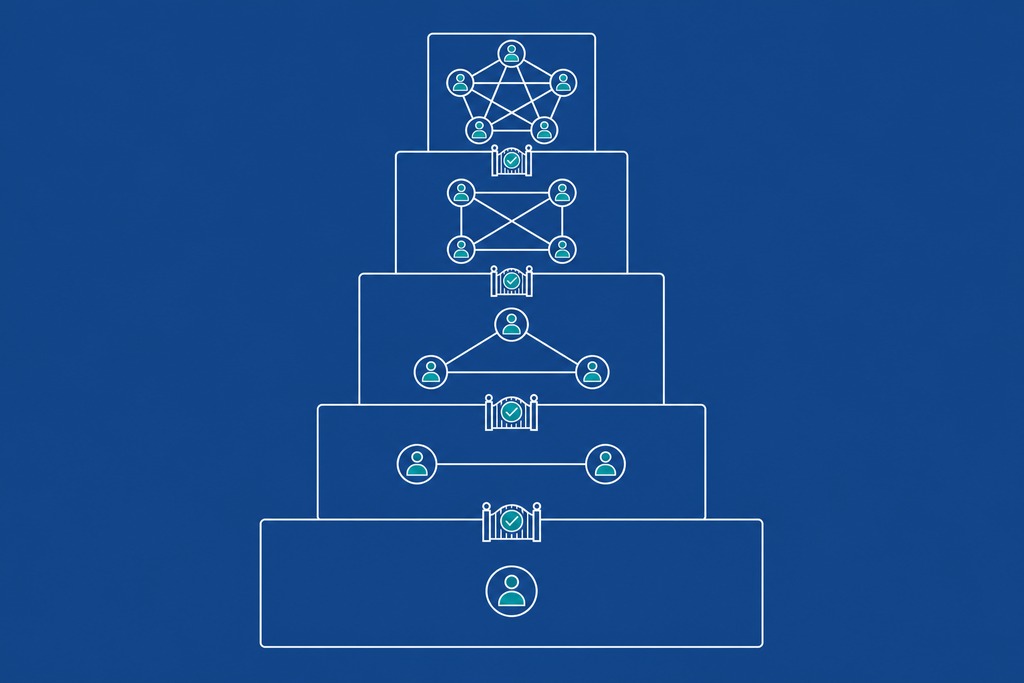
Run your task through this escalation ladder. You stop at the first step that doesn't clear, and most tasks stop early.
- Start single. Give one agent good tools, memory, and prompting. Most tasks are solved here at a fraction of the cost.
- Escalate only if the task splits into genuinely independent parallel subtasks: not steps that constantly reference each other.
- …and the value justifies the spend of 4–15× the tokens and 10–50× the model calls.
- …and you need independent verification or distinct specialized roles, tools, or models that one agent can't juggle well.
- …and the total context exceeds one window, so distributing it across focused agents actually relieves a real limit.
If you do go multi, keep the agent count minimal — every agent adds failure surface. Give the orchestrator explicit decomposition and delegation rules. Have workers return condensed results, not raw dumps, to control token growth. Build evaluation harnesses, because multi-agent behavior is hard to reason about without them. And prefer read-heavy parallelism, like research, over write-heavy coordination, like several agents editing the same file.
The hybrid middle ground
It isn't strictly binary. The design most production systems are converging on in 2024–2026 is a single orchestrator agent that delegates to a small number of specialized workers — centralized control with just enough distributed specialization to matter. You keep one place that owns the plan and the final answer, while workers fan out on the parts that are genuinely independent. This captures much of the parallelism upside without the full coordination tax of many peer agents talking to each other, which is why "one orchestrator, a few workers" has become the practical default when a plain single agent isn't enough.
The tools for each
The framework you pick mostly signals which architecture you've committed to. A few, notably LangGraph, span both, which is useful when you expect to start single and grow.
| Framework | Single or multi-agent | Notes |
|---|---|---|
| ReAct | Single | The base reason-and-act loop most single agents run on |
| LangChain | Single (primarily) | Tool and agent chaining |
| LlamaIndex | Single | RAG-focused agents over your data |
| LangGraph | Both | Stateful graph coordination; single or multi |
| AutoGen (Microsoft) | Multi | Conversational multi-agent orchestration |
| CrewAI | Multi | Role-based orchestration for production workflows |
| MetaGPT | Multi | Simulated software company with role agents |
| ChatDev | Multi | Simulated development team |
| Camel | Multi | Role-playing cooperative agents |
FAQ
Are multi-agent systems more accurate than single agents?
Not automatically. On straightforward, single-domain tasks, single agents often match or beat multi-agent setups, because extra agents add coordination and failure surface rather than guaranteed quality. Multi-agent accuracy gains — Anthropic's ~90% on breadth-first research, Microsoft Research's 15–40% on some reasoning benchmarks — appear on genuinely decomposable work, not on everything.
How much more expensive is a multi-agent system?
Expect 4–15× the tokens and 10–50× the model calls of a single agent for the same task. A single agent that uses about 5,000 tokens can become 25,000–40,000 tokens once you add three agents and a review loop, because each handoff re-injects context. Anthropic reported roughly 15× for its own research system.
Is multi-agent better for coding?
Often no. Cognition's guidance "Don't Build Multi-Agents" argues that for coding, a single agent with excellent context beats fragile handoffs where one agent loses information another had. Multi-agent helps coding only when the work splits cleanly into independent design, implementation, test, and review stages.
Can a single agent handle very long documents?
Up to a point. Single agents are bounded by one context window of 128k to 1M tokens, and even within that range they retrieve facts buried mid-context less reliably — the "lost in the middle" effect. When the material genuinely exceeds what one window holds well, distributing it across focused agents is one of the few clear reasons to go multi.
Do more agents make a system more reliable?
No. A failing worker can be contained, but errors can just as easily cascade across handoffs, and a "critic" agent reduces but doesn't eliminate that risk. Fault isolation is not fault tolerance — a single agent's single point of failure is not automatically the worse bet.
References
- Anthropic, "How we built our multi-agent research system" (engineering blog) — reports roughly 15× token use and a ~90% gain on breadth-first research evaluations.
- "Why Do Multi-Agent LLM Systems Fail?", UC Berkeley, 2025 — taxonomy of specification, inter-agent misalignment, and verification failures.
- Cognition, "Don't Build Multi-Agents" — guidance favoring single-agent designs with strong context for coding.
- Microsoft Research — reported 15–40% gains for multi-agent systems on complex reasoning benchmarks.
- Framework documentation: Microsoft AutoGen, CrewAI, LangGraph, MetaGPT, ChatDev, LlamaIndex, and LangChain.